Whether you drive a daily commuter in Cape Coral, a weekend toy in Fort Myers, or a luxury vehicle in Naples, this guide breaks down exactly what ceramic coating costs in Southwest Florida and what you get at each tier. If you already know you want protection, you can explore our ceramic coating service or request a personalized quote directly.
What Every Package Includes
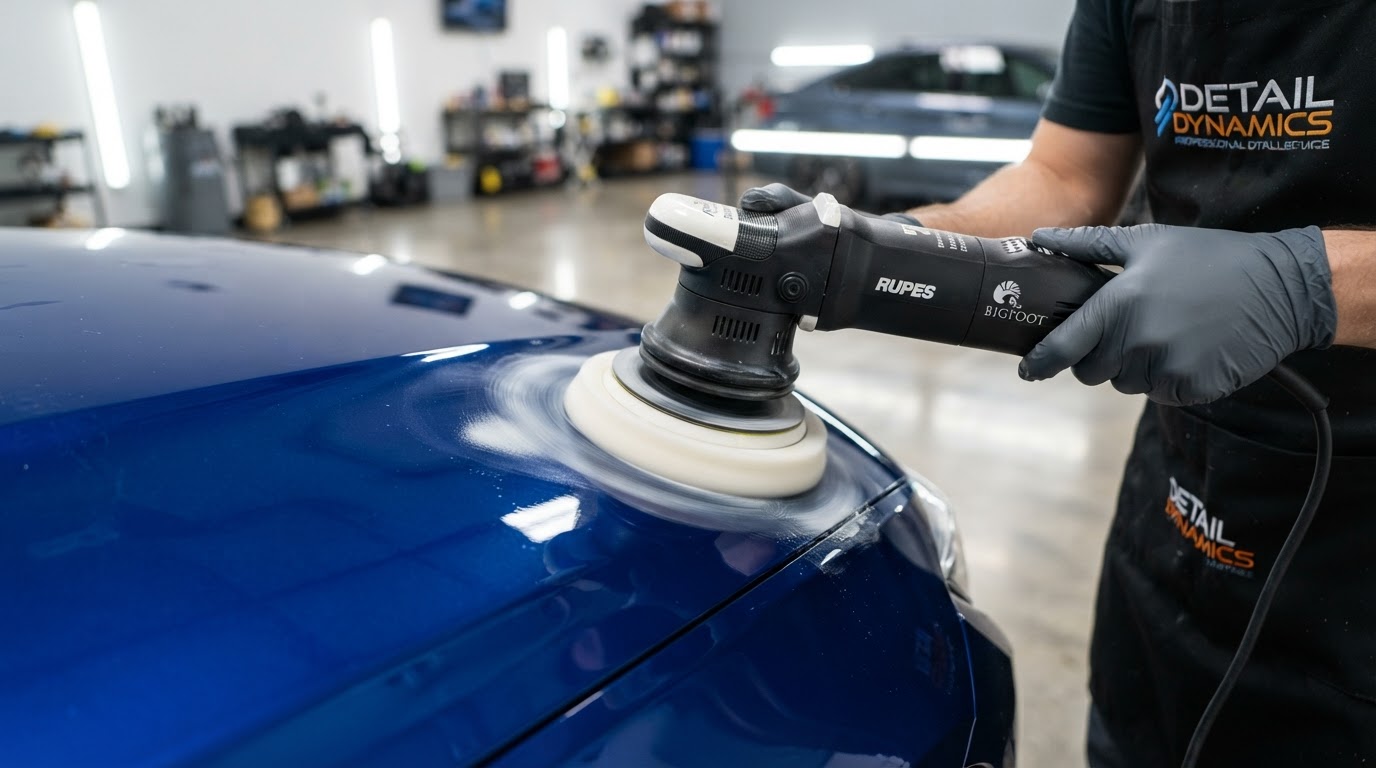
Some installers charge separately for every level of paint preparation. At Synester Auto Lab, a one-step paint enhancement is included with every ceramic coating package. More extensive correction may be recommended when the paint has deep swirl marks, oxidation, etched water spots, or other defects that should not be sealed beneath the coating. Any additional correction is discussed and approved before work begins.
If your vehicle needs deeper defect removal, you can learn more about that process on our paint correction page.
What Affects Ceramic Coating Cost?
The starting prices above reflect a typical vehicle in reasonable condition. Your final quote may be influenced by:
- Vehicle size and surface area
- Current paint condition
- The amount of correction required beyond the included enhancement
- Selected protection term
- Optional protection for wheels, glass, trim, headlights, or other surfaces
- Mobile installation conditions and location
This is why we provide personalized quotes rather than a single flat price — the right coating package should match your vehicle, your ownership goals, and the actual condition of your paint.
Is Ceramic Coating Worth It in Florida?
Southwest Florida is one of the most demanding environments for automotive paint. Intense UV exposure, high humidity, sudden rain, salt air near the coast, insects, bird droppings, tree sap, and constant environmental contamination all work against your clear coat year-round.
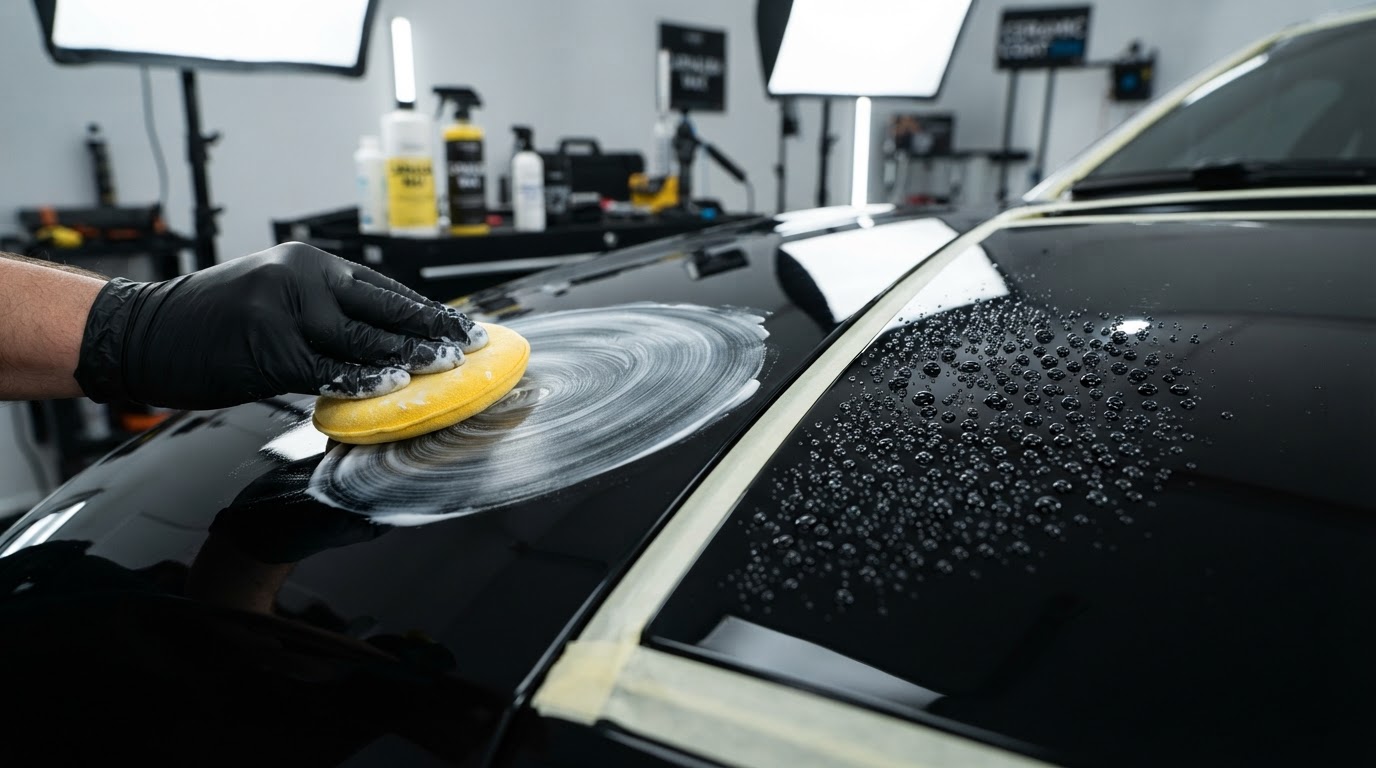
A ceramic coating creates a semi-permanent bond with your clear coat that improves chemical resistance, makes cleaning easier, produces hydrophobic behavior, adds UV resistance, enhances gloss, and helps protect against environmental contamination. It does not, however, make your paint invincible — proper washing and maintenance are still necessary, and contaminants like bird droppings or bug remains should still be removed promptly to avoid etching.
What ceramic coating does—and does not—protect against
What it does
- Chemical resistance: Resists acidic and environmental contaminants better than bare clear coat.
- Easier cleaning: Contaminants bond less tightly, so washing takes less effort.
- Hydrophobic behavior: Water beads and slides off, carrying loose dirt with it.
- UV resistance: Helps defend against the fading and degradation caused by constant sun exposure.
- Enhanced gloss: Deepens the clarity and reflectivity of your paint.
- Environmental contamination protection: Provides a sacrificial layer against fallout, sap, and bird droppings.
What it does not do
Ceramic coating does not prevent rock chips, dents, or significant scratches. It is a liquid polymer, not a thick physical barrier. For protection against physical impact, we recommend paint protection film (PPF), which is engineered to absorb road debris and stone impacts. Many owners combine the two — PPF on high-impact areas and ceramic coating over the full vehicle for gloss and easy maintenance.
Why Professional Preparation Matters
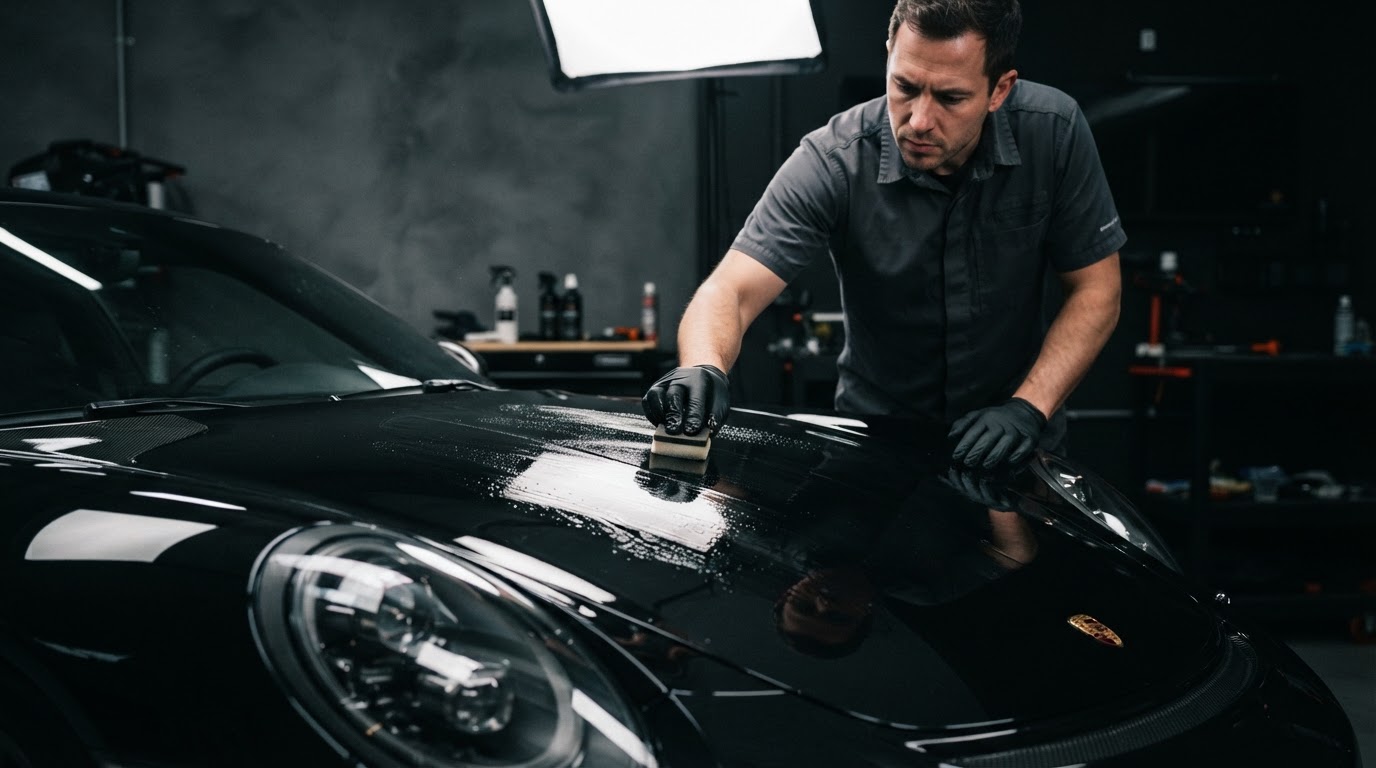
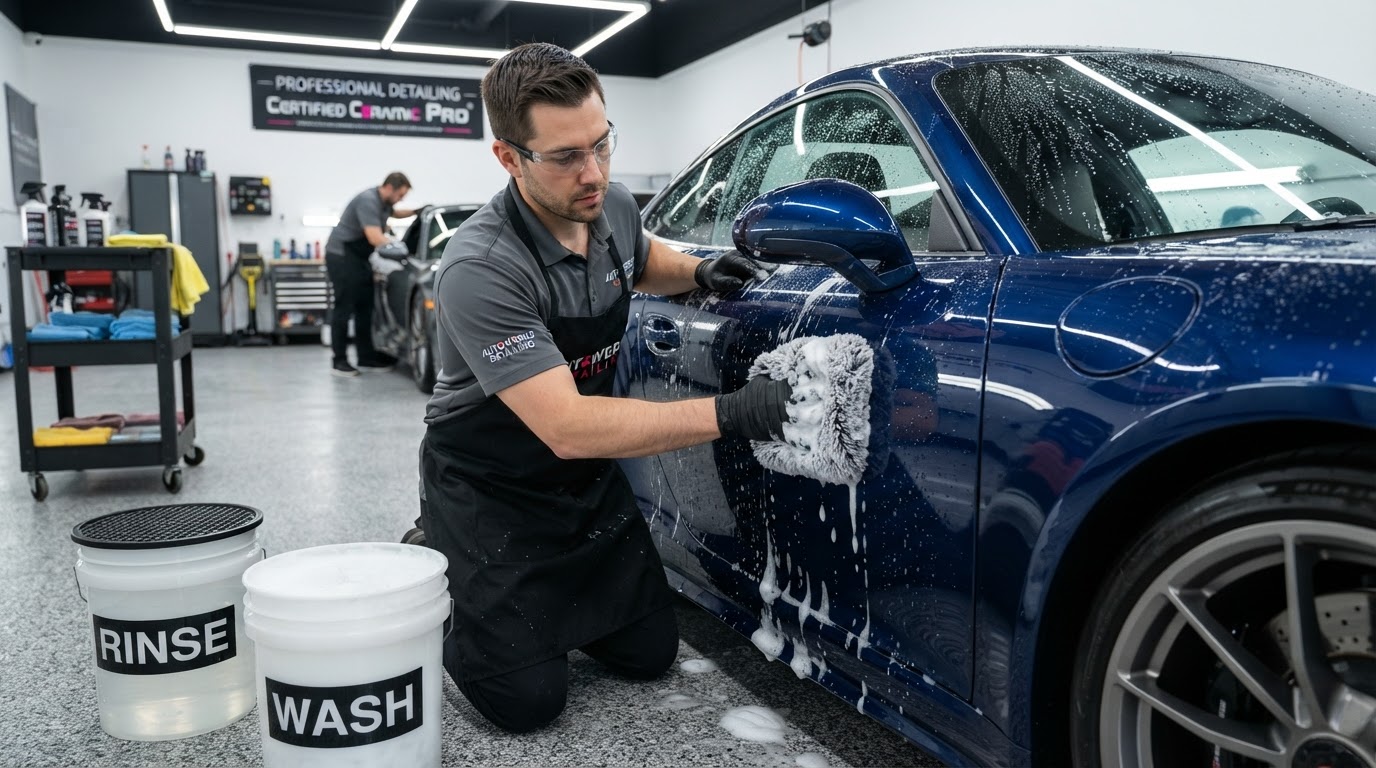
A ceramic coating locks in the exact condition of the surface beneath it, which is why preparation is the most important part of the process. Our mobile lab follows a structured preparation and application workflow:
- Thorough cleaning: Loose dirt and grime are removed so the surface can be evaluated and prepared safely.
- Chemical and mechanical decontamination: Appropriate iron remover and clay treatment pull embedded contaminants out of the clear coat when needed.
- Paint inspection: We evaluate the paint to identify swirls, scratches, oxidation, and water-spot etching.
- Machine polishing: The included one-step enhancement (and any approved additional paint correction) refines the surface before coating.
- Surface preparation: A panel wipe-down removes all polish residue and oils so the surface is chemically clean for bonding.
- Coating application: Ceramic is applied panel by panel and leveled before the next section is treated.
- Curing: The coating is inspected before delivery, with a full cure period following our ceramic coating aftercare guidance.
For the full cure timeline and washing guidance, see our ceramic coating aftercare guide.
Which Ceramic Coating Package Is Right for You?
Choosing a package comes down to how long you plan to keep the vehicle and how much protection you want:
- Essential for drivers seeking affordable professional protection.
- Precision for most Southwest Florida daily drivers.
- Elite for owners keeping their vehicle five years or longer.
- Pro for premium, enthusiast, or long-term vehicles.
- Signature for owners seeking lifetime protection. (Includes one complimentary maintenance wash within two months so Synester Auto Lab can inspect the coating and confirm that it is performing correctly).
If you are also considering comprehensive preservation, our Vehicle Protection Program walks through how coating and film work together.
One Last Thing
The single biggest price difference in Southwest Florida ceramic coating often comes down to the paint’s condition and the preparation required—not simply the coating bottle or advertised durability rating. Two identical vehicles can receive quotes differing by several hundred dollars simply because one has severe swirl marks and clear-coat etchings baked in from automatic car washes while the other has clean, well-maintained paint.
Some installers quote a low number and then surprise vehicle owners with hundreds of dollars in mandatory prep fees. At Synester Auto Lab, every package includes a one-step machine paint enhancement so you never get hit with surprise prep charges just to receive a baseline bond. Any recommended deeper correction is always inspected, quoted, and approved before our mobile technicians begin work.